A novel by Michael Malice
What do the following people have in common?
Donald Trump, Milo Yiannopoulos, Gavin McInnes, Mike Cernovich, Steve Bannon, Pat Buchanan, Ann Coulter, Jared Taylor and Chris Cantwell.
They all belong to the political right wing. All of them to varying degrees I might add, which is a point the author illustrates beautifully in this book. Where has this New Right come from? Is everything right of center Far Right, or Alt-Right? Is everyone in this new movement racist? Is it a coincidence that over the last few years as the progressive movement has become more radical and more culturally relevant, the New Right has done the same in its own way?
That’s a lot of questions. And I will do my best to answer them, or most of them.
Core Concepts for Understanding the Origins or Motivations of the New Right
The New Right
In the opening pages of the book Malice gives the definition for the New Right, which he says is also sometimes used as a synonym for the “Alt-Right”. He defines the New Right as such:
“A loosely connected group of individuals united by their opposition to progressivism, which they perceive to be a thinly veiled fundamentalist religion dedicated to egalitarian principles and intent on totalitarian world domination via globalist hegemony.”
He goes on to talk about the more widely known faction of this New Right being the Alt-Right, which tends to view race-not racism- as one of if not the most important sociopolitical issue. He also speaks about the spectrum on which the New Right exists, showing that even the Alt-Right itself is not completely composed of white nationalists and Neo-Nazis. Although those groups do have a substantial representation within it.
The New Right Spectrum
Back to the beginning, and the question of what do all those people I mentioned have in common. Yes I said they belong to the political right wing, but more specifically, they exist on the New Right spectrum. Just like on the left where you have some people closer to the center that maybe resemble classical liberalism, people in the middle of the left and then people that are straight up communists, the New Right has its own range of identity. Arguably the most tolerable of this spectrum is Ann Coulter or”The Divine Miss C”, as is her chapter title in the book. Malice attributes to her the ability to “taking basic conservative ideas and saying them in such provocative ways that leftists could no longer maintain their facade of genteel decency”.
Then there is someone like Mike Cernovich, who definitely identifies as being of the New Right. He also previously identified with the Alt-Right until Charlottesville and Richard Spencer the Neo-Nazi became the face of the movement. Promulgating controversial ideas like anti-feminism in the manosphere, but also not afraid to support things like some sort of UBI as well as single-payer healthcare, a man like Cernovich is an example of the complexity of views held by some on the New Right.
The far end of the New Right spectrum is inhabited by the most deplorable, with the likes of Neo-Nazi Richard Spencer, white supremacist Christopher Cantwell-also known as the Crying Nazi- and race realist Jared Taylor. In the chapter featuring Taylor, named “The New Hwhite”, making fun of how says the word “white”, in which he accentuates the “H” in the word, sounding like “hu-wite”, we see that although there are obviously reprehensible views held by these individuals, they are not entirely to be disregarded.
Here I’m not supporting anything that the likes of Jared Taylor or Richard Spencer are advocating, I’m saying that the ideas,whenever encountered, need to be challenged. As Malice put it ,“Even if someone were completely wrong, they could still be bright and thought-provoking in their errors. It is by having our ideas challenged and confronted that we come to better understand why we think like we do.”
It is because of the farthest of right that we can come to view the likes of Coulter and Cernovich in a more reasonable way. It is an act of comparison that makes people more okay with one, when the other is so far out of reason.
“The Cathedral”
The concept of the cathedral quickly became introduced into the book as a great explanation of the political left establishment and how a great deal of people not in it view it from the outside.This concept was defined by the blogger Mencious Moldbug, at his now defunct blog Unqualified Reservations. The progressive left establishment is described as the cathedral because “the left is the party of the educational organs, at whose head is the press and universities. This is our 20th century version of the established church”. He goes on further to describe how the combination of the educational system, with the Associated Press and the like, are able to act as an unofficial government agency. Not susceptible to the checks and balances or any other retribution but also able to affect wide spreading ideas and cultural movements.
“Politics is downstream from Culture”
“Politics is downstream from culture” is the famous quote and strategy implemented by Andrew Breitbart, a now deceased american conservative journalist and founder of Breitbart News and co-founder of HuffPost. Breitbart believed that in order to change the politics one must first change the culture, and to do so one must find out the units of culture,so to speak. The units of culture or the people that make it up really, would be just that…people!
With Andrew at the head of his link-aggregator style website, it was to be the voice of the right online. Paraphrasing Breitbart, stories of race and other stories of particular sensitivity need to be dealt with with the utmost care and diligence. Sadly it was noted that after his passing, and with new executive and political strategist Steve Bannon at the helm, the site quickly became more and more aligned with Far Right and Alt-Right movements.
Smear City
Quickly the author touches on the Left leaning establishment’s love for smearing its opponents, and often with terms as dramatic as possible. He mentions that in the current culture the term “racist” has two meanings. The real one meaning you believe other races to be inferior to your own, and the other meaning you’re “against progressivism”.
Here I’d like to even highlight a bit from my previous article “Barbie”, where as an aside from the review I point this growing trend for people-often left leaning- to use the harshest of terms in a way to immediately discredit one that they argue or disagree with. This shows up in the film with a tween calling Barbie a fascist, but can more in the current culture when someone disagreeing with “public opinion” is often referred to as a “racist”, “fascist”, or even a “radical” depending on how they disagree with what issue.
Now this isn’t to say that there aren’t people that accurately represent those terms, but in order to validate those claims there needs to be evidence, not just the evidence of a difference in opinion.
Another tactic of the establishment media is to use very broad terms or concepts without exact definitions. This isn’t just done by the left, this is a widespread phenomena. Terms that have a common interpretation of positivity like democracy, liberty, freedom and a big one “rights”, can be used plug-and-play style. When you hear that everything a right-leaning spokesperson is advocating for is a “threat to our democracy”, or that a new law proposed by the current news channel’s opposition might be “an attack on individual rights”, it would be understandable to have some fear or even panic. Especially if you’re a longstanding member of the political party that the news channel reports for.
My question to you is, what’s the definition of democracy? If it’s that the many make the rules for the few(which in essence it is), then isn’t a working and successful democracy when tides change and a different section of the population is having its views and concerns represented?
Or how about rights? Because that’s a really tricky one. You have the positive view of rights and then the negative view of rights(and even this distinction comes under fire by some thinkers but I’m not getting into a treatise on rights here so…sue me!). Simply put, negative rights lean towards the Classical Liberal view, so protection of individual freedoms, resulting in the ability to be left alone in as many ways as possible in life. Positive rights are more assertive in that a human being in society would have the right to legal defense, food, shelter, etc. Negative rights exist unless someone acts to negate them, whereas positive rights is that you have the right to be affected by an action taken by other people or another group.
This may seem like another off-topic tangent, and to a point it is. But the main point is that whether it be a deep philosophical discussion or just a report by the news, if a broad term is being used without a specific definition then one should be curious and even suspicious of the user’s aims.
The New Right as Reactionary
Something Malice talks about often is not only how small the number is for the participants of the New Right in its beginning, but how this smaller stature aided them in their ability to turn heads and hit news headlines. In chapter 4, which is aptly titled “Meme Magic is Real ”, he talks about how the few were able to use internet meme culture as a way to mess with the people not in on the jokes.
The New Right was able to play with this with its special fondness for trolling. Trolling as defined by the author “doesn’t simply mean insulting someone in virulent or racist terms. Trolling is meant to be clever. At its best, it is the art of turning an audience into a performer by exploiting their flaws for comedic effect.” With a small and somewhat organized counter culture the New Right holds its distaste for the mainstream at its base. The movement has been reactionary insofar as how far the progressive left movement took things, the trolls and memers on the New Right have no problems going even farther in their own direction.
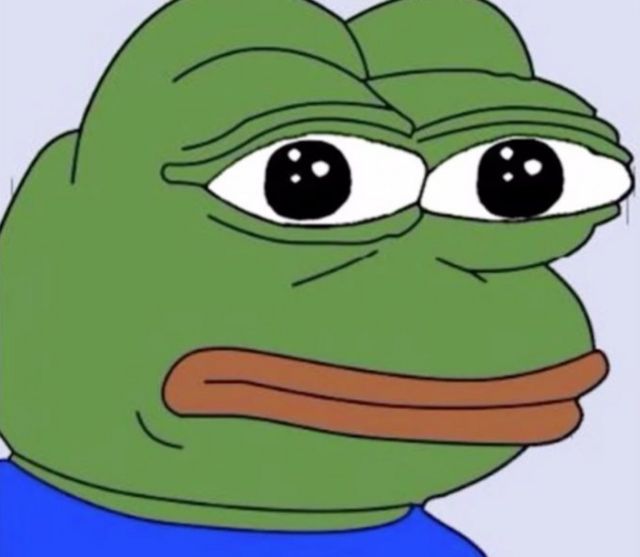
With the Cathedral’s love to also ascribe meaning to what it’s opposition said, it didn’t take long for somewhat silly and innocent(although a fair amount were not-so innocent) jokes and memes to become misconstrued by the mainstream left-wing media as symbols of fascism, white supremacy and all the other hot button boogeymen.This resulted in people eventually thinking things like Pepe the Frog was a symbol of white supremacy and Nazism.
Why did I write this? And why actually read the book?
First off I will say that this is not a complete, comprehensive review of the book.
I skipped several parts that I don’t think are necessarily motivating to read the book, but are very important to understanding the history of the New Right movement nonetheless.
This includes the history of Murray Rothbard-who if you like economics and libertarianism, you should be familiar with- and the fractures that happened in the 1900’s that eventually created the movements we see now.
The chapter about Gavin McInnes I do believe is a must read, simply for the fact that if you don’t take him seriously he is outright hilarious.
I wrote this because I strongly dislike that many on the left view the other half of the political establishment as irredeemable and absolutely abhorrent. I do believe that although this distaste and disdain has always existed at some level, it has only intensified over the last ten to fifteen years.
Am I saying that the New Right is exactly the Left’s fault? Not necessarily, but I do agree with the opinion that as far Left as the culture goes there will always be an opposite movement of those who don’t want to go along with the mainstream. Both sides have similar views on things, albeit one tends to be more socially acceptable to hold, while one is morally reprehensible. I would say that using a concept like “The Cathedral”, helps explain how that comes to be. An example of this is the white nationalists viewing race as the most important sociopolitical issue, not unlike their left-leaning critical race theory spouting counterparts. Does one view have more history as disgusting and evil? Yes. Is the other view one which modern day racists tend to agree with because the essence is the same insofar as it takes race as the most important metric through which to view society and social interactions? Also yes.
One thing I continue to hear in conversations of politics and culture is how “we are more divided as a country than ever”. This is completely ridiculous when looking at the reality of the civil war. The proposal that we are again on the brink of civil war, is so baseless and laughable that I find it hard to address seriously.
I’ll admit that almost always this opinion is put forth by one from the Boomer generation of either side, left or right. I find this view to be ridiculously out of touch and more than likely driven by establishment propaganda. Whether it’s Fox News or MSNBC, that generation still has in mind that not only are these institutions worth listening to, but that they are not some of the worst offenders in instigating this nation wide political and cultural divide.
“The personal is the political”
I agree more than I can say, that the view that people ought to be defined by their ideology, is disgusting. Now obviously there are limits, but people seem to be having trouble finding out what those limits are. Now obviously calling it a difference of opinions as to whether or not the Holocaust happened, is beyond wildly inappropriate. But a disagreement over immigration or the size of government, is hardly something to excommunicate someone over.
I’ve met plenty of conservatives that would do anything for a friend or stranger, and I have witnessed more than I’d like to admit, instances of so-called liberals berating people for not having the majority accepted view on some hot-button issue.
If one side of the political aisle is going to have no problem with dismissing people because of their noncompliant views then I see no reason why the other side wouldn’t do the same.
For every action there will be a reaction. Whether or not it is of equal strength remains to be seen.
 Free to be
Leave a comment